The best food experiences in Palma de Mallorca are not always found at a table. Some of them happen at a market stall at eight in the morning. Some happen around a fire in a garden, watching rice slowly absorb saffron-coloured stock. Some happen in a kitchen, hands covered in flour, trying to understand why a dish that looks simple is harder to master than it appears.
Palma has a genuinely exciting food scene. Over the last few years it has grown into one of Spain’s most interesting cities for eating, with a culture built around seasonal, Balearic ingredients and a pace of life that makes meals feel unhurried and worth staying for.
But the best version of Palma’s food culture is not really about which restaurant to book. The Infatuation covers the restaurant side well. What this guide is about is the experiences around food in Palma: the ones that leave you with more than a good meal. The ones that give you a story.
Mercat de l’Olivar: the real starting point

Every serious food day in Palma starts at Mercat de l’Olivar, the city’s main covered market near the old town. It has been running since the 1950s and it remains the best single place to understand what Mallorcan food actually is.
You will find stalls of Balearic cheeses, sobrasada in every size and strength, fresh fish laid out on ice, vegetables that look like they were pulled from the ground that morning, and vendors who have been selling the same produce to the same families for decades. Go before ten. Take your time. Buy something you do not recognise and ask what to do with it.
The market also has a food hall where locals come for lunch. It is informal, affordable, and far more interesting than most of the tourist-facing restaurants a few streets away. If you want to eat like someone who actually lives in Palma, this is where you start.
Despite Mercat de l’Olivar being the most visually striking market in Palma — recently renovated, polished, and full of colour — here is an insider tip: Pere Garau market has more character. It is where locals actually go, not to browse, but to shop as part of their daily routine. The atmosphere is louder, denser, and at times almost chaotic, with a constant flow of people moving through tight spaces. It feels less curated and far more real.
From Monday to Saturday, the streets around the market come alive with outdoor stalls that extend the experience beyond the building itself. There is a rotating mix of vendors, informal setups, and a steady rhythm of exchange between sellers and buyers. It is not as pretty, but it is more alive — and if you want to understand how Palma actually eats, this is where to look.
A paella cooking class with a Valencian chef
Palma has no shortage of cooking classes, but most of them teach you to make tapas or pasta, dishes you could learn from a YouTube video in thirty minutes. A paella class is different, and a paella class taught by someone who grew up cooking it in Valencia is different again.
I have been running Paella Lover School sessions in Palma for years, and what I have noticed is that people come expecting to learn a recipe and leave having understood something much larger: why paella takes patience, what the fire does that a gas hob cannot fully replicate, how a dish that looks chaotic from a distance is actually built on precision and timing.
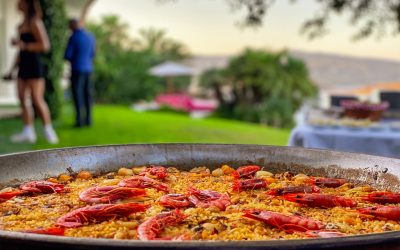
The class includes the full process: building the sofrito and the stock, choosing and toasting the rice, adding stock at the right moment, and the long, disciplined wait for the socarrat to form at the bottom of the pan. Then you eat what you have made, together, straight from the pan. Every participant also receives multiple surprises to take home, both physically and in their minds. More information about the sessions is on the Paella Lover School page. It is one of the best food experiences in Palma for groups, couples, and solo travellers alike.

Santa Catalina neighbourhood: eat like a local
Santa Catalina is the neighbourhood most food-conscious visitors to Palma gravitate towards, and for good reason. It is less polished than the old town, more lived-in, and full of places that are genuinely good rather than simply well-positioned for tourists.
The neighbourhood has its own market, Mercat de Santa Catalina, which is smaller than the Olivar but equally good for produce and atmosphere. The streets around it are lined with independent restaurants, wine bars, and bakeries. Come for a morning coffee and stay until lunch without planning anything.
This is also where you find the kind of casual, seasonal cooking that Palma does best: small plates, fresh local ingredients, food that changes with what the market offers that week rather than following a fixed menu. It rewards wandering.
Paella Mallorquina: the island’s own version of the dish
Most visitors know paella as a Valencian dish, which it is. But Mallorca has developed its own version over centuries, shaped by the island’s geography and the ingredients available to it. Paella Mallorquina uses sobrasada, the island’s famous paprika-cured sausage, alongside seafood and local vegetables. The result is richer and smokier than a classic Valencian paella, with a character that is unmistakably of this place. We have written about it in more detail in our guide to Paella Mallorquina: it is worth reading before you visit if you want to understand what to look for.
Finding a genuinely good Paella Mallorquina is harder than finding a mediocre one. Look for places where it is made to order, not sitting in a bain-marie. Look for the socarrat at the bottom. And if you want to be certain of quality, come to us.
Paella To-Go: the everyday food experience locals rely on
Not every food experience in Palma needs to be a full afternoon commitment. Our Paella To Go service at Travessa d’en Ballester, 2, in the centre of Palma, offers a proper takeaway paella made fresh with real ingredients, ready to collect and take home or eat nearby. It is available any day of the week, not just Sundays.
For visitors staying in an apartment or villa, this is one of the most satisfying ways to eat in Palma: a meal made with the same care as a restaurant, eaten at your own table, at your own pace, without a reservation or a bill at the end. For locals, it has become part of the weekly rhythm. Either way, it is good food without the fuss.
Eating with the seasons in Palma

One of the things that makes food in Palma genuinely special is how seasonal it remains. The island is small enough that local produce still dominates menus in a meaningful way, and the best places to eat in Palma change what they offer as the year moves.
In spring, artichokes appear everywhere. Summer brings tomatoes, peppers, and the freshest seafood of the year. Autumn turns things earthier: mushrooms, game, root vegetables. Winter slows everything down and deepens it, with heartier dishes and longer lunches.
If you are planning a visit around food, knowing the season shapes everything. A paella cooked in July is a different meal to one cooked in November, even if the pan is the same. We explore this in more depth in our post on seasonal paella and how the market shapes the pan. That responsiveness to time and place is what separates the best food experiences in Palma from the ones that could be happening anywhere.
And every month we offer different seasonal paellas on Fridays and Saturdays, where we use the ingredients available during that time of the year for our Paella To Go service.
What makes a food experience in Palma worth remembering
The best food experiences in Palma de Mallorca share something in common: they connect you to the island rather than insulating you from it. They put you in a room with local producers, or around a pan with a cook who has been doing this their whole life, or in a neighbourhood that has not been built for tourists.
Palma has plenty of excellent restaurants. But the experiences that stay with people longest are usually the ones that had some element of participation: a market visited, a dish cooked, a technique understood, a socarrat scraped up from the bottom of a pan and eaten standing at a fire.
If you are planning a visit and want to build something around food, start with the market, spend an afternoon cooking paella, and eat in Santa Catalina for dinner. For a closer look at how paella fits into a typical day in Palma, our post on the best paella in Palma is worth a read before you arrive. That is not a bad day in Palma by any measure.
Until next time,
HAPPY PAELLA!!
— Guillermo Bermell