6 Most Common Paella mistakes (And How to Solve Them)
By Guillermo Bermell
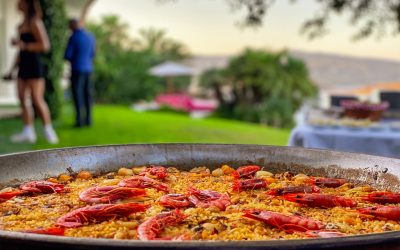
Have you ever thought: “Will I burn the paella”, How much rice do I have to put in it”, “I hope I don’t make any mistakes”, or “what is it I don’t have to do to make paella come out right?” … Well, here are 6 mistakes that are normally made when cooking paellas. And the solution!
- Water/broth proportion: the proportion must be the right one, otherwise the rice will be either dry and not cooked or overcooked, tending to form a paste. The proportion is normally between 2,5 to 4 times more stock than rice, depending on the exact variety of rice. The proportion is easier to measure when the broth is prepared in a separated pot (when cooking for instance seafood paella), but complicated when doing it in the paella, when cooking the authentic traditional valencian paella, as the stock is normally prepared in the same pan.

- Stir the rice: rice MUST NOT be stirred, only in the moment where you put it in the pan and distribute it all over. Do this only a little bit – maybe 30 seconds. After it, any stirring would make the rice lose the starch it contains and consequently the rice becomes thicker, like a risotto. And we are preparing a paella, where the rice has to be dry and loose at the end.
- Too long boiling/cooking: if the paella is cooked too long, the rice will be thicker and tending to a paste. The ideal timing is the following: when putting the rice in the paella, bring the mix to boil during 10 minutes. This will break the heart of the rice and it will start absorbing the stock. Then reduce fire at the minimum possible during another 7-10 minutes (depending on the rice), where it will take the rest of the liquids and it will remain whole and loose.
- Too much fire: same effect to above. If this happens at the end, the fire will make the first layer of rice burn…. And, yes! we want a little bit of “socarrat”, this layer of caramelized rice at the bottom of the paella. But not burned or black.
- Not leveling the pan properly: it seems obvious, but people tend to forget about the importance of this step. On the contrary, some parts of the paella will be too cooked and other parts the rice will be still hard. You avoid this as follows: at the very beginning of the preparation, put some oil in the middle of the pan, which should be a little bit warm, so the oil flows faster. It will be then very easy to level the pan with this small trick.
- Thick layer of rice: if the layer of rice is thick, the stock will not be absorbed equally by the star ingredient of the paella. Imagine: at the beginning, the stock covers all the rice, but when it is absorbed, the lower part still will have plenty of it (which will be possibly overcooked) and the upper part will tend to be not cooked or without flavor. Therefore, the layer of rice should be one centimeter or less. This almost guarantees the rice to be dry and loose to delight all your guests and yourself.


Bon profit!
If you would like to find out all of this and much more, click here to download the free eBook “Your First Steps To Your Own Traditional Authentic Paella”.
How did you like this blog? If you have any questions or comments related to my story or paella cooking, then feel free to post them in the comments section below.
HAPPY PAELLA!!